





News | 20 November 2026
Geothermal’s next frontier: can next-generation technology deliver reliable power at scale?
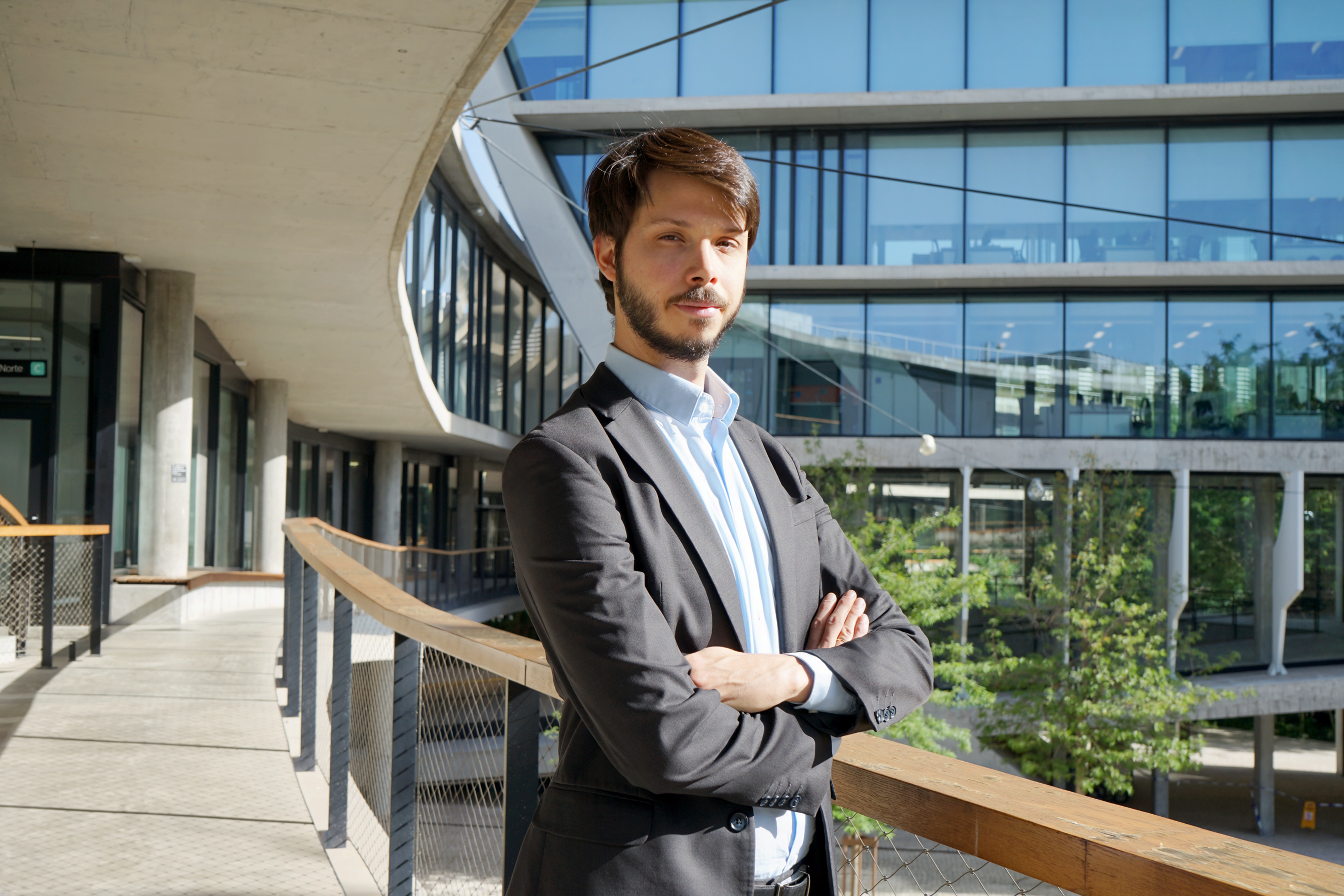
As rising electricity demand and technological advances reshape the energy landscape, geothermal is attracting renewed interest as a potential source of reliable, low-carbon power. Following his participation in the second episode of Going Beyond by BBVA, Antonio Montero, Executive Director, Low Carbon Advisory, Global Geothermal Lead at BBVA, shares his insights in this in-depth interview, exploring the technological breakthroughs, market opportunities and financing challenges that could shape geothermal's path towards commercial scale.
As electricity demand rises, advanced geothermal is gaining attention as a potential source of reliable, around-the-clock low-carbon electricity. Yet its wider deployment will depend on whether developers can consistently deliver projects at competitive costs.
The second episode of Going Beyond by BBVA brings together industry perspectives to examine how innovation, growing power demand and investment could shape the commercial future of geothermal energy.
Featuring experts from Fervo Energy, Boston Consulting Group and BBVA, the discussion explores the opportunities and challenges involved in scaling this technology, from subsurface engineering to project financing.
Question: Geothermal has been around for decades, but it is now attracting renewed attention from developers, investors and major energy consumers. What has fundamentally changed, and why could this be the moment for geothermal to scale?
Answer: I believe we are witnessing the convergence of three fundamental forces: rapidly growing electricity demand, major technological breakthroughs, and an increasing willingness from energy buyers and financial institutions to support new sources of reliable clean power.
Geothermal itself is not new. What has changed is our ability to access it economically and, equally importantly, the value that electricity markets place on reliability.
Technologies developed in the oil and gas industry, particularly horizontal drilling and advanced reservoir engineering, are unlocking resources that were previously inaccessible. Meanwhile, data centres, industrial electrification and energy-security priorities are increasing interest in power sources that can operate continuously.
We are also seeing the emergence of the commercial and financing structures needed to turn these opportunities into real infrastructure projects.
For me, next-generation geothermal could gradually move beyond locations with naturally favourable reservoirs. Whether it becomes a scalable infrastructure segment will depend on consistent commercial delivery.
Q: With AI, data centres and industrial electrification increasing demand for electricity, why is the reliability of low-carbon power becoming so important? Where does geothermal fit?
A: For the last two decades, the energy transition has largely focused on producing more renewable electricity at increasingly competitive costs. That has been an extraordinary success, particularly for wind and solar.
But the next phase introduces a different challenge: it is no longer just about how much clean electricity we produce, but also about when that electricity is available.
AI, data centers and electrified industrial processes require reliable power around the clock. Increasingly, electricity availability is becoming a strategic factor for industrial competitiveness and economic growth.
This is where geothermal offers a compelling proposition. It can provide continuous, low-carbon generation, largely independent of weather conditions, with very high capacity factors.
Importantly, geothermal is not competing with wind and solar. It complements them, adding reliability and resilience to increasingly complex electricity systems.
I think the next phase of the energy transition will be defined by the ability to deliver not just clean energy, but firm clean power.
Q: Which technological advances are opening up new geothermal resources, and what still stands in the way of large-scale deployment?
A: The most significant breakthrough is our ability to engineer geothermal reservoirs rather than depend exclusively on naturally occurring geological conditions.
Enhanced Geothermal Systems, or EGS, combine advanced drilling, well stimulation, subsurface monitoring and reservoir management techniques, many of which have been developed and refined by the oil and gas industry.
This dramatically expands the potential geographic reach of geothermal and opens the door to a much larger addressable market.
However, technological feasibility is only the first step. The real challenge now is demonstrating repeatability: delivering multiple projects with predictable drilling performance, reservoir productivity, construction schedules and costs.
Developers must also manage permitting, environmental considerations, grid access and long-term reservoir performance.
From an investment perspective, the critical transition is from proving that a technology works to demonstrating that it can be deployed consistently under commercial conditions.
The first successful project validates the technology. Repeating that success at scale is what creates an industry.

Q: Financing remains one of the key challenges for emerging energy technologies. What makes a geothermal project financeable? What does BBVA’s participation in Fervo Energy’s Cape Station project tell us about the sector’s development?
A: From a financing perspective, the key is converting technological potential into predictable cash flows and manageable risks.
For a project to become bankable, we need confidence in three areas: technical performance and execution, long-term revenue visibility through credible offtake arrangements, and contractual structures that allocate risks appropriately among the different stakeholders.
Our participation in Fervo Energy's Cape Station Phase I project in Utah is a particularly relevant example.
According to the transaction published information, BBVA participated as a Coordinating Lead Arranger and Hedging Coordinator in a landmark $421 million non-recourse project financing supporting approximately 100 MW of next-generation geothermal capacity.
The transaction suggests that some advanced geothermal projects may be able to access project-finance structures traditionally used for infrastructure, subject to appropriate commercial agreements and risk assessment. It does not, by itself, establish that the technology is broadly bankable.
At BBVA, our approach combines deep sector and technology knowledge with project finance expertise and the ability to structure and finance solutions across the capital stack. Understanding the underlying technology is essential to evaluating risks and developing financing structures that can support commercial deployment.
Cape Station provides an example of how technological development, commercial arrangements and financing can come together in an emerging segment of the energy market.
Project finance does not eliminate risk. Its role is to identify, allocate and manage risks in ways that can support long-term investment.
Q: Looking towards 2035, what evidence would convince you that geothermal is becoming a mainstream infrastructure option? What should companies and investors watch?
A: I believe geothermal could play a larger role in some electricity systems by 2035, particularly where reliable low-carbon generation, energy security and industrial demand are priorities. The scale of that contribution remains uncertain.
But achieving that potential will depend less on individual technological breakthroughs and more on the industry's ability to execute and replicate projects at scale.
There are three things I would watch closely: the evolution of drilling and project costs, the demonstrated long-term performance of commercial geothermal reservoirs, and the development of financing and regulatory frameworks that enable large-scale investment.
The opportunity is not confined to the United States. In Europe, geothermal may also support industrial heat applications; parts of Latin America and Asia have resources and market conditions that warrant further assessment.
For corporate leaders, geothermal represents a potential new source of reliable clean energy. For investors, it could become an emerging infrastructure asset class. And for financial institutions, the opportunity is to help bridge the gap between innovation and industrial deployment.
My conviction is that the future of geothermal will not be determined solely by the heat beneath our feet, but on whether projects can deliver reliable, competitively priced energy with risks and impacts that can be effectively managed.